SCREEN PRINTING GUIDES · BASICS
Screen printing: what it is and how it works
Screen printing is one of the most versatile printing techniques: it prints on fabric, PVC, non-woven material and much more, with bright, durable colours. This guide explains how it works and when it is the right choice.
Published 5 min read
In short
- In screen printing, ink passes through a fine mesh screen, only where the design is open.
- Each colour has its own film positive, its own screen and its own print pass.
- It prints on fabric, PVC, non-woven material, components and many other substrates.
- It pays off mainly on runs with few colours; for a few items in many colours, DTF may be better.
- The ink is chosen for the substrate and the way the item will be used.
01
What is screen printing?
Screen printing is a printing technique in which ink is pushed through a fine mesh stretched on a frame. Where the design is, the mesh is open and the ink passes through; everywhere else it is blocked and the ink stays behind.
Each colour of the design is printed separately, with its own screen. That is why a one-colour logo is simpler to prepare than a four-colour design. The item used to transfer the design onto the screen is the film positive.
02
How it works, step by step
There are four main stages from file to printed item. The first three are preparation; printing comes last.
01
Final artwork
The file is set to the actual print size and separated colour by colour.
02
Film positives
Each colour is output onto a clear film, with that part of the design in opaque black.
03
Screen exposure
The screen, coated with light-sensitive emulsion, is exposed with the film positive. Where there is black, the emulsion washes out and the mesh stays open.
04
Printing
The squeegee pushes the ink through the open mesh onto the substrate. The ink then dries or is cured, depending on its type.
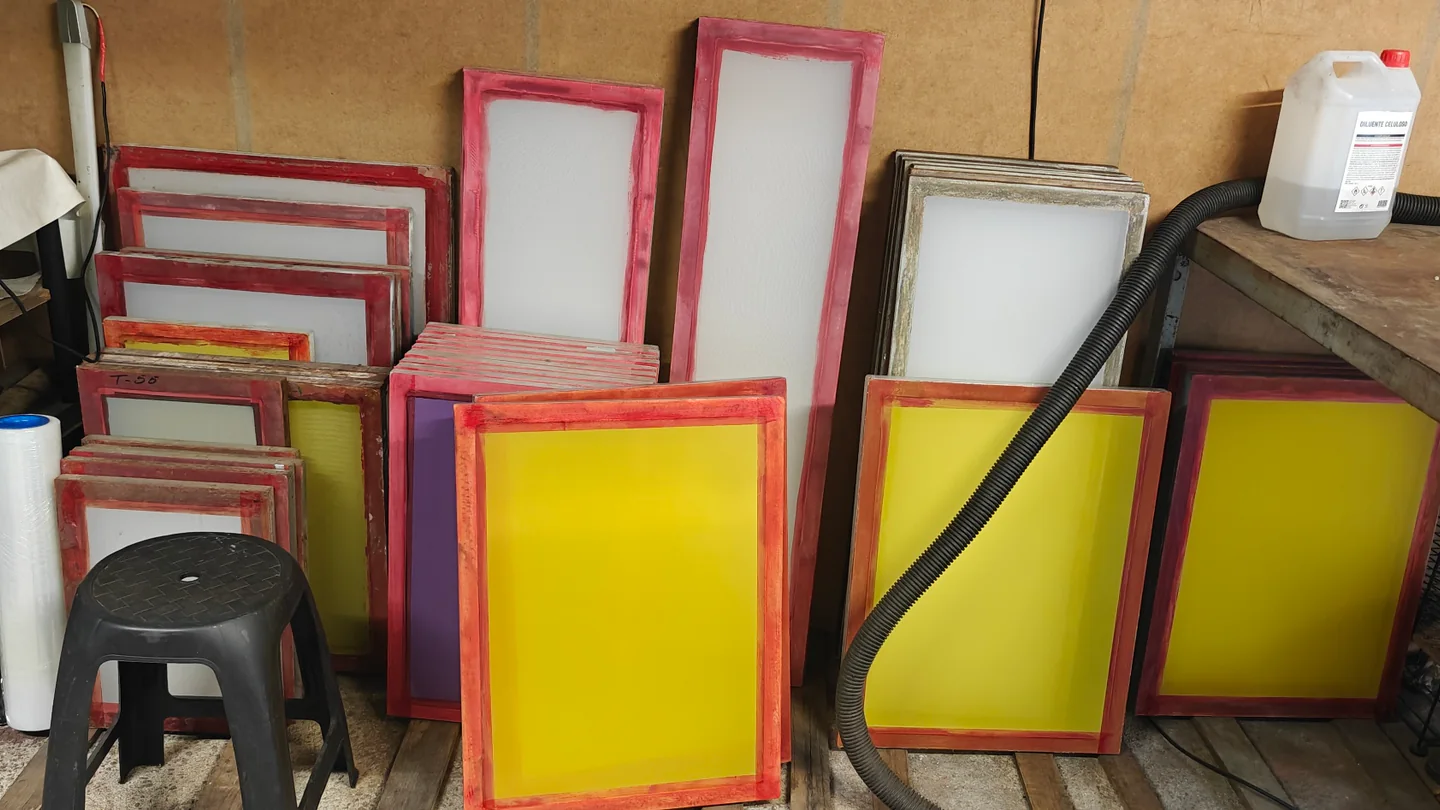
Frames and screens are a big part of the preparation. If you need screens for your own printing, you can draw them in our screen printing frame tool.
03
Which materials it works on
Screen printing works on flat surfaces and on finished items, as long as the ink suits the material.
- Fabric and clothing
- Bags, covers, T-shirts, sweatshirts and workwear. See fabric screen printing, T-shirt printing and custom bags.
- PVC and plastics
- Bags, packaging and technical parts in clear or coloured PVC. See PVC screen printing.
- Non-woven material
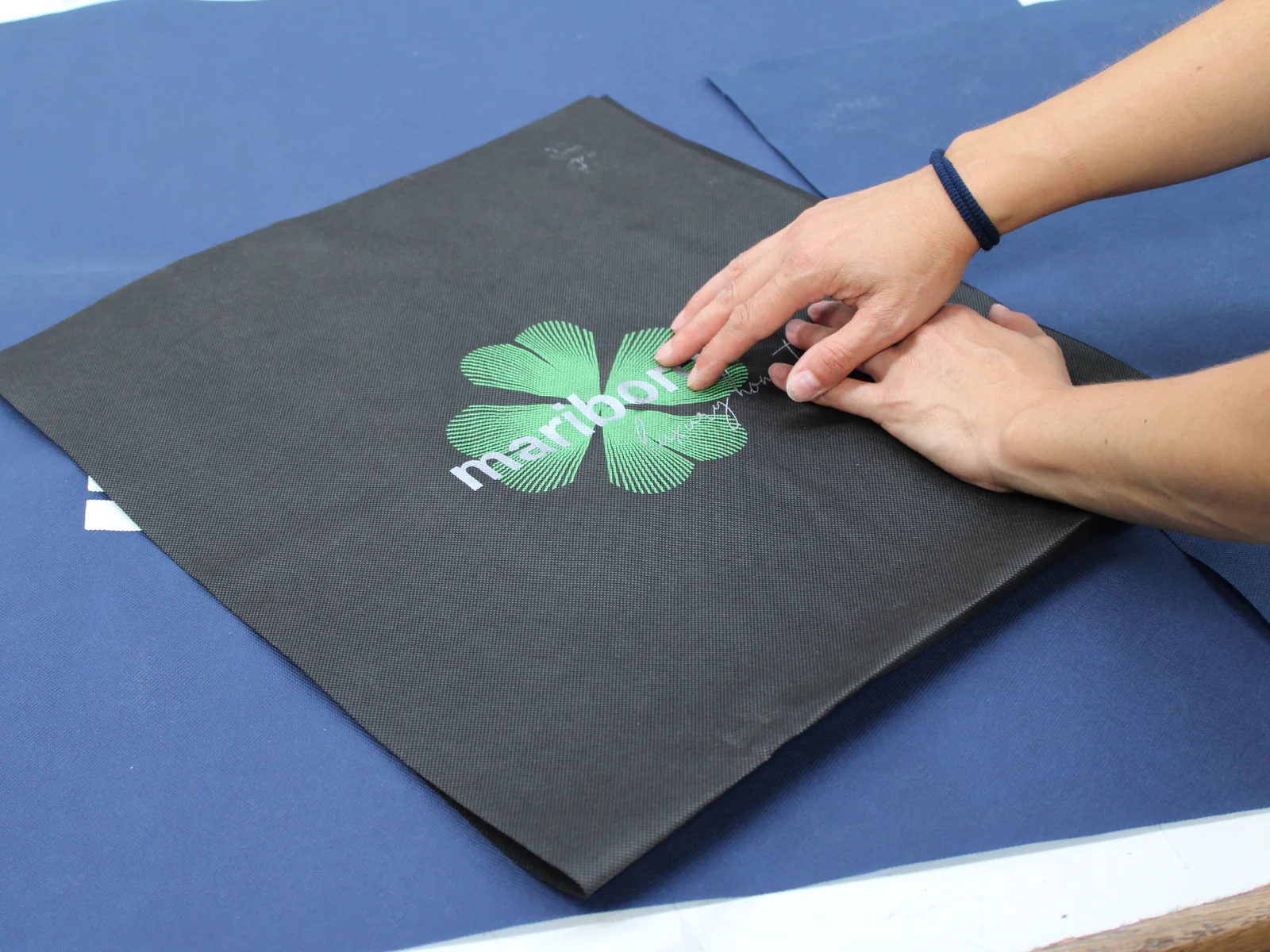
- Non-woven bags and covers. See non-woven bags.
- Components
- Insoles, vamps and other production parts. See footwear components.
04
Which inks are used
There is no single ink for everything. The choice depends on the material, the colour of the item and how it will be used: an item washed every week needs a different ink from a promotional bag.
Ink type
- Plastisol
- A textile ink widely used on clothing.
- Water-based
- A water-based textile ink.
- For plastics
- Inks formulated for PVC and other plastics.
- UV-cured
- Inks that dry under ultraviolet light.
What it is for
- Plastisol
- Opaque colours that show well on dark fabrics. Cured with heat.
- Water-based
- A softer feel, especially on light fabrics.
- For plastics
- They bond to smooth surfaces where textile inks do not.
- UV-cured
- Used mainly on plastics, paper and rigid surfaces.
The ink and curing are chosen for each job after assessing the material. If you have a sample of the item, send it with your request.
05
Strengths and limits
- Bright, opaque colours
- The ink layer is thicker than with other techniques and covers well, even on dark backgrounds.
- Durability
- With the right ink and curing, it stands up well to use and washing.
- Good value on runs
- Once prepared, each item prints quickly: the cost per item falls as the quantity grows.
- Many substrates
- Fabric, PVC, non-woven material and components, each with the right ink.
- Preparation per colour
- Each colour needs its own film positive and screen, which weighs on small quantities.
- Photos and gradients
- They are possible, but need more preparation and do not suit every substrate.
06
Screen printing or DTF?
On textiles, the most common alternative is DTF: the design is printed on film and transferred with heat, with no film positives or screens. It pays off for a few garments, many colours, photos or different names. Our DTF guide explains it in full, and you can work out the film on the DTF by the metre page.
For runs with few colours, especially on PVC, non-woven material and components, screen printing remains the usual choice.
07
What to include in a quote request
- Substrate
- Material, colour and, if possible, a photo or sample of the item.
- Design
- Vector file (PDF, AI, EPS or SVG) and number of colours.
- Size and position
- Print size and position on the item.
- Quantity
- Approximate number of items.
- Deadline
- When you need the job.
Our film positives guide explains in detail which files to send and how the number of colours affects the quote.